.png)


Oven Detailing Carbon Neutralisation: Smoke, Odour & Deep Degreasing
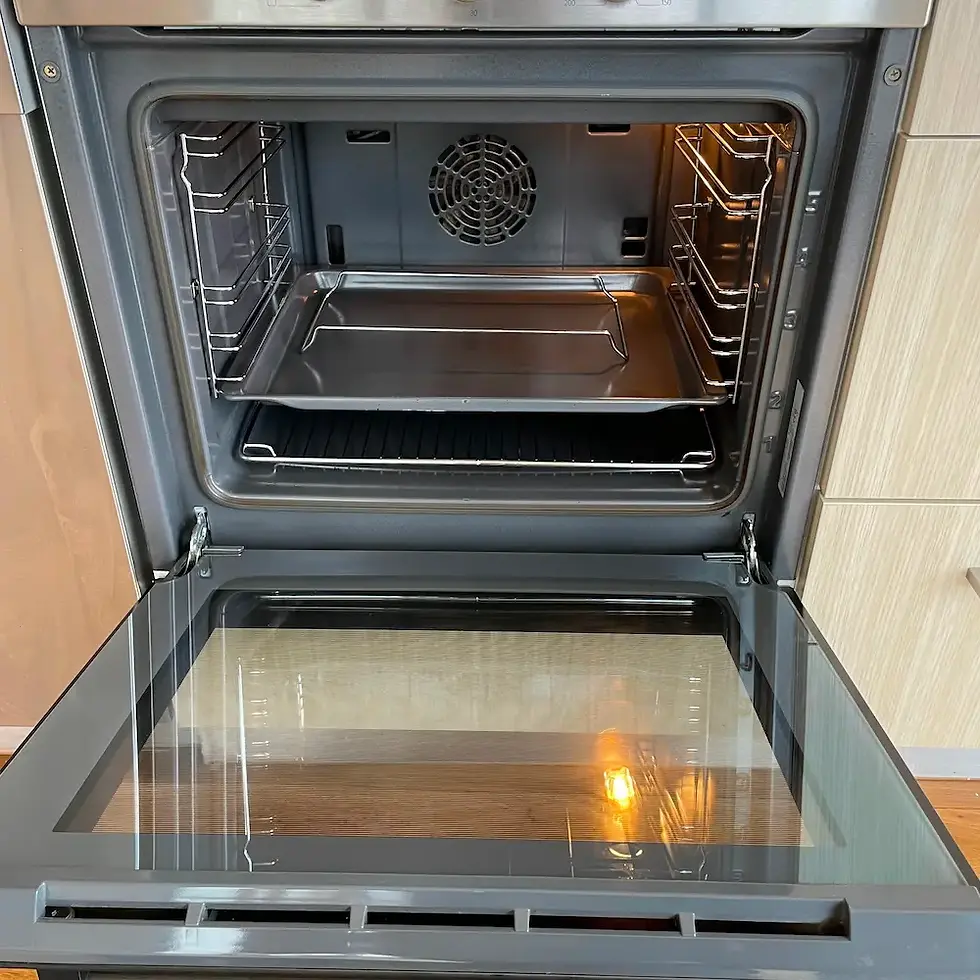
A heavily carbonised oven is a major compromise to both kitchen hygiene and indoor air quality. Over months of high-heat cooking, food splatters and fat aerosols bake into a hardened, black carbon crust across internal cavity walls, wire racks, door glass, and rubber seals.
When this baked-on residue is repeatedly reheated, it creates a cascade of problems: dense kitchen smoke, acrid burnt odours that saturate open-plan living areas, uneven thermal distribution, and fire risks.
This technical oven restoration process is one of the most requested deep cleaning additions along with our signature Spring Cleaning Services.

1. The Carbonisation Failure Chain: Smoke, Odor & Indoor Air Quality
When organic food fats and sugars are subjected to repeated temperatures above 180°C, they undergo thermal degradation, turning from soft grease into dense carbon buildup. This creates several immediate household problems:
Acrid Smoke & Indoor Air Contamination: As the oven heats, caked-on carbon on the floor and heating elements begins to burn. In modern open-plan living setups, common in apartments across St Kilda, Elwood, and Port Melbourne—this releases toxic acrid smoke and airborne particulates directly into dining and lounge spaces.
Flavour Contamination & Bad Odours: Vaporised carbon and rancid fat residue taint fresh food, imparting a bitter, burnt taste and leaving unpleasant smells that linger in soft furnishings long after the oven is turned off.
Door Void & Seal Degradation: Spills migrate past worn rubber door seals and seep into the glass door void (between the inner and outer panes). Trapped grease along hinges and seals degrades rubber elasticity, preventing the door from sealing tightly and causing heat loss.
Fire Hazards & Thermal Inefficiency: Heavy carbon crust along internal walls and heating elements acts as an insulator, forcing the appliance to draw more electricity while creating a risk of localised fat fires.
If you are dealing with broader kitchen ventilation issues or greasy exhaust canopy buildup, read our technical guide on rangehood detailing and grease extraction.
2. The Science of Carbon Neutralisation & Non-Scratch Scrubbing
A quick wipe with store-bought aerosol sprays only scratches the surface. True carbon neutralisation requires breaking down carbon polymers down to the base substrate:
Sub-Surface Soaking Baths: Removable components—including side racks, wire trays, roasting pans, and door seals—are dismantled and submerged in specialised non-corrosive decarbonising solutions for 30 to 45 minutes. This softens hardened burnt-on crust without damaging metal plating.
Non-Abrasive Mechanical Scrubbing: Once the carbon matrix is broken down, technicians use non-scratch scouring tools to lift dislodged carbon from glass panes and porcelain-enamel interior cavity walls without etching delicate protective surfaces.
Thermal Hot-Water Rinsing & Conditioning: All components undergo a hot-water rinse to completely neutralise chemical residue. Exterior stainless steel panels, control knobs, and digital interfaces are then sanitised, dried, and polished to restore a factory sheen.
For window frame and perimeter glass care across coastal environments, review our breakdown on window track detailing and salt extraction.
3. Regional Cooking & Property Layout Stressors
Oven carbon buildup impacts living environments differently depending on property architecture and local climate:
Compact Coastal & High-Rise Apartments
In compact apartments across Melbourne CBD, Albert Park, and Surfers Paradise, kitchens directly adjoin main living spaces. A smoking, carbonised oven quickly fills small floor plans with toxic haze and lingering odour.
Sprawling Bayside & Sub-Tropical Family Homes
In larger family residences across Brighton, Hampton, Mentone, Geelong, Sunshine Coast, Brisbane, high-frequency family cooking leads to heavy grease accumulation across multi-rack setups, requiring comprehensive deep cleaning to maintain kitchen hygiene standards.
4. The Whole Detail Protocol: Step-by-Step Oven Detailing and Carbon Neutralisation
Component Dismantling & Soak
Wire racks, side grills, tray runners, and door seals are carefully removed and submerged in a dedicated decarbonising solution for 30 to 45 minutes.
Door & Glass Void Disassembly
The oven door is unhinged and outer glass panels are separated to access and clean the internal void where streaks and dripped grease collect.
Internal Cavity Carbon Breakdown
Specialised, low-odour decarbonising agents are applied to the internal roof, sidewalls, floor, and fan cover to soften caked-on residue.
Precision Non-Scratch Scrubbing
Burnt carbon is carefully scraped and scrubbed off enamel walls, corners, and element surrounds using material-safe tools.
Hot-Water Rinse & Neutralization
The cavity and soaked parts are thoroughly wiped down with clean hot water to purge chemical traces and loose carbon slurry.
Reassembly, Button Rejuvenation & Polish
Racks, glass, and seals are reinstalled. Control dials, handles, and exterior surfaces are deep cleaned and polished before a final operational check.
5. End-of-Lease Compliance & Appliance Longevity
In addition to seasonal resets, complete oven detailing and carbon neutralisation is an absolute requirement for tenancy bond returns. Real estate property managers across VIC and QLD inspect ovens thoroughly during end-of-lease handovers.
If you are preparing to hand back keys or move out, review our complete, agent-approved End of Lease Cleaning Service Scope to ensure your bond return is fully protected.
Ready for a Total Kitchen Appliance Reset?
Whether you need a dedicated single-appliance reset or a full-home transformation, explore our flexible booking options:
Book Standalone Oven Detailing: Skip the wait and reserve a technical oven carbon neutralization session directly on our Oven Cleaning Booking Page.
Explore All Extra Services: View our complete menu of individual add-ons—from fridge resets to window track extraction—on our Additional Cleaning Services Hub.
Pick & Shop Fixed Pricing: Build a custom cleaning package tailored to your exact floor plan on the Whole Detail Precision Pricing.
Bundle with a Full Home Clean: Combine oven detailing with a complete property reset via our 1 Bed 1 Bath Spring Clean, 2 Beds 2 Baths Spring Clean, or 3 Beds 2 Bath Spring Clean layouts.

Comments